



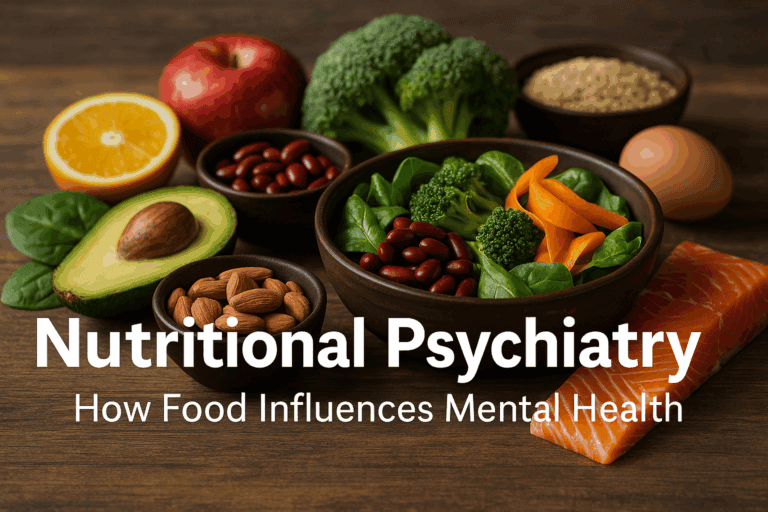
What Is Nutritional Psychiatry? A Simple Explanation for Mental Health Clients
Nutritional psychiatry is an emerging field that examines how the foods we eat directly influence our mental and emotional well-being. Rather than treating the brain as a separate entity, nutritional psychiatry recognizes that the brain relies on nutrients, biochemical processes, and whole-body health to function properly. What we eat affects far more than physical energy, it plays a role in mood, clarity, motivation, anxiety levels, and emotional stability.
Nutritional psychiatry looks at how dietary patterns, nutrient availability, gut health, and metabolic function are connected to common mental-health concerns such as anxiety and depression. Research has shown that food quality can influence inflammation, blood sugar regulation, neurotransmitter production, oxidative stress, and gut–brain communication. While nutrition doesn’t “cure” mental health conditions, it has a meaningful impact on how the brain operates day to day. When the body is overwhelmed, undernourished, or out of balance, the mind often reflects that dysregulation.
This mind–body connection helps explain why many people notice changes in mood when they skip meals, rely on processed foods, or experience digestive issues. Others may find that anxiety increases when blood sugar swings or that depression worsens when nutrient intake is inadequate. Nutritional psychiatry gives language to these experiences, helping clients understand that emotional shifts often have physical contributors and that mental health is never “just in the head.”
A question that often arises is whether psychotherapists can incorporate nutritional psychiatry into their therapeutic work. The answer is yes. Psychotherapists can use research-based psychoeducation to help clients understand how nutrition influences mood and stress. They can discuss dietary patterns associated with better mental health outcomes, highlight nutrients shown to play a role in emotional balance, and help clients notice how their own eating habits relate to their emotional states. This guidance is educational, supportive, and well within a therapist’s scope when presented as information not as individualized medical or dietary advice.
Integrating nutritional psychiatry into therapy does not replace the therapeutic process; it strengthens it. Clients often feel validated when they learn that their emotional symptoms are connected to biological processes. Understanding this connection fosters self-compassion and reduces shame, helping clients make sense of their experiences from a full-body perspective. Therapists who incorporate nutritional psychiatry can offer a more holistic approach, supporting clients as whole human beings mind, body, and brain together.
Medically Reviewed by Teralyn Sell, PhD, LPC